If you picture every Miami waterfront property the same way, you could miss what really matters. A home on Biscayne Bay, a canal-front property, a riverfront address, and a condo with ocean access can offer very different ownership experiences. If you are searching for the right fit in Miami, Miami Beach, Kendall, or greater Miami-Dade, this guide will help you understand the main types of waterfront homes available in Miami and what to look at beyond the view. Let’s dive in.
Bayfront Homes and Condos
Bayfront homes and condos are tied most directly to Biscayne Bay, one of the defining water features of Miami-Dade. Miami-Dade notes that Biscayne Bay spans 428 square miles, and the City of Miami Beach describes it as the body of water that surrounds and separates Miami Beach from the mainland. When buyers imagine classic Miami waterfront living, bayfront is often what they have in mind.
Bayfront properties usually offer open-water views and a strong connection to Miami’s coastal setting. They can range from luxury single-family homes to condo residences that overlook the bay. From a lifestyle standpoint, the appeal is often the scenery, breezes, and direct relationship to Biscayne Bay.
That said, bayfront ownership is not only about the view. Miami-Dade monitors water quality at dozens of sites along Biscayne Bay and major drainage canals, and notes that open-water sites in the Bay and other tidal waters meet or exceed recreational standards. Still, day-to-day use can vary, especially after rain or during changing conditions, so it helps to think about how you want to enjoy the water, not just whether you can see it.
Canal-Front Homes
Canal-front homes are one of the most common waterfront categories in Miami. These properties may sit on seawater canals, man-made freshwater canals, or other canal rights-of-way. In practical terms, this is often where buyers need to ask the most questions.
Miami-Dade distinguishes between tidal waters, bay bottom lands, and nontidal canals and rivers in its environmental code. That matters because the type of waterbody can affect permits and what kind of waterfront improvements may be allowed. A canal may look ideal in photos, but the real value depends on whether it supports the use you want.
If you are considering a canal-front home, focus on a few basics early:
- Whether the canal is tidal or nontidal
- Whether the waterway is usable for the type of boating you want
- The condition of the seawall or bulkhead
- Whether a dock or lift is already in place or may be possible
In Miami, two canal-front homes can look similar online and function very differently in real life. That is why the exact waterbody matters as much as the waterfront label.
Riverfront Homes
Riverfront homes in Miami usually refer to frontage on the Miami River or a river-connected stretch of the city. The City of Miami identifies the city as being located on the Miami River between the Florida Everglades and the Atlantic Ocean. For buyers who want an urban waterfront setting, riverfront can offer a distinct option.
Riverfront living tends to feel different from bayfront or canal-front ownership. In many cases, it offers a more in-city experience with access to a working and historic water corridor. Depending on the exact location, the feel, traffic, and use of the water can vary.
From a property standpoint, riverfront also comes with its own regulatory considerations. Miami-Dade’s permit code explicitly covers work in rivers, so any plans involving shoreline work, docks, or related improvements should be reviewed carefully. For buyers, the key is to understand the specific segment of river frontage and what rules apply to that property.
Ocean-Access Homes and Condos
Ocean-access is one of the most popular terms in Miami real estate, but it is better understood as buyer shorthand than as a formal property category. In general, it usually refers to a canal-front or riverfront property that can reach tidal waters by boat. For many buyers, this term signals boating convenience, but it should never be taken at face value.
The important question is not just whether a listing says ocean access. The real question is what kind of access exists, what waterbody the property sits on, and whether the property has the rights and approvals needed for docks, lifts, or seawall work. Miami-Dade makes clear that tidal and nontidal distinctions are important in permitting.
For condos, ocean-access claims deserve even closer review. If a building advertises boating or marina amenities, buyers should confirm whether any slip, marina, or boat-use rights are actually included in the condo documents or association rules. A waterfront lifestyle can look one way in marketing and another in the governing documents.
What Matters Beyond the Waterfront Label
Riparian Rights and Water Access
One of the most important concepts in Miami waterfront ownership is riparian rights. Under Florida Statute 253.141, riparian rights are rights tied to land bordering navigable waters and can include ingress, egress, boating, bathing, and fishing. These rights attach when title reaches the ordinary high-water mark.
For buyers, this means you should confirm what rights actually come with the parcel. A property may sit on the water, but the legal and practical use of that waterfront still needs to be verified. If you are buying with plans for boating or shoreline improvements, this step is essential.
Docks, Seawalls, and Permits
In Miami-Dade, waterfront improvements often require more than a contractor and a design. The county says owners may need county permission along with other government approvals for items such as docks and seawalls. A Class I application may require written consent from the upland owner with riparian rights, and Class III permits may apply to work in or around nontidal lakes, canals, rivers, and other water areas under direct county control.
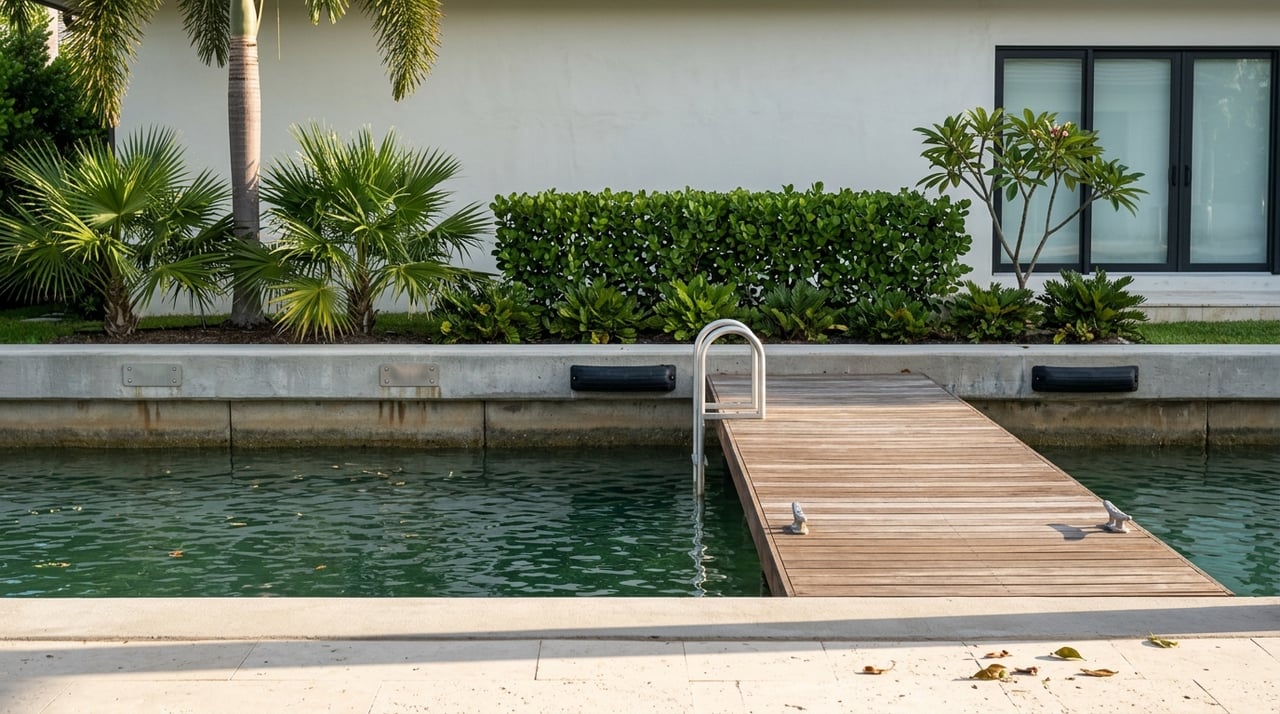
That makes existing shoreline infrastructure a major part of due diligence. If a home has a dock, pier, seawall, bulkhead, or mangrove edge, you will want to understand its condition and whether future repair or replacement could trigger permits or reviews. Waterfront maintenance is part of ownership, not just a one-time purchase detail.
Flood Zones and Insurance
Flood risk is central to buying waterfront property in Miami-Dade. The county states that the region is especially flood-prone because it sits close to sea level. It also provides flood maps and a property-level flooding vulnerability viewer to help owners and buyers understand exposure.
One term to know is VE zone. Miami-Dade defines VE zones as coastal areas with additional storm-wave hazards and mandatory flood insurance. If a property falls into that category, the ownership costs and risk profile may look very different than a listing photo suggests.
Miami-Dade also notes that sea-level-rise planning uses a 2040 projection of 10 to 17 inches above 2000 levels. If you are buying for long-term ownership, it makes sense to review not only the current flood zone but also broader resilience and vulnerability information tied to the property.
Water Quality and Daily Use
Not every waterfront property is used the same way. Some buyers want boating, others want paddleboarding, and many simply want a relaxing view. In Miami, water quality and conditions can vary by waterbody.
Miami-Dade says Biscayne Bay remains one of Florida’s healthiest estuaries, but also notes that some urban canals and some portions of the Bay are impaired. The City of Miami Beach advises residents to check beach conditions and after-rain advisories because stormwater runoff can affect bay and ocean water quality. So if your waterfront goals include frequent in-water use, ask practical questions early.
Shoreline Condition and Resilience
A waterfront edge is part of the property itself. Miami-Dade says shoreline restoration and living shorelines are part of its resilience toolkit, and county permit pages note that one-time environmental permits may be needed for work such as dock or pier construction and for most mangrove trimming.
That means shoreline condition should be reviewed from the beginning of your search. Even if structures already exist, repair, replacement, or substantial improvement may still require permits. The more you understand up front, the fewer surprises you are likely to face later.
A Simple Miami Waterfront Checklist
When you compare waterfront homes in Miami, try using this checklist:
- Identify the exact waterbody and whether it is tidal or nontidal.
- Verify whether riparian rights attach to the parcel.
- Check whether any dock, lift, or seawall work has been approved.
- Review the official flood zone, including whether the property is in a VE zone.
- Ask about HOA or condo rules if slips, marina use, or shoreline changes matter to you.
- Review the condition of the seawall, bulkhead, dock, and shoreline early.
- Use Miami-Dade’s flooding vulnerability tools if you are planning for long-term ownership.
This kind of review can help you compare properties more accurately, especially across neighborhoods and waterfront settings in Miami-Dade.
Choosing the Right Waterfront Fit
The best type of waterfront home in Miami depends on how you want to live. If you want open-water scenery, a bayfront home or condo may feel like the clearest match. If boating access and flexibility matter most, a canal-front or river-connected property may deserve a closer look.
The key is to move beyond the general word waterfront. In Miami, the most useful distinction is whether a property is bayfront, canal-front, riverfront, or ocean-access, and what rights, permits, flood exposure, and day-to-day realities come with that setting. When you understand those differences, you can search with much more confidence.
If you are exploring waterfront homes in Miami, Coconut Grove, Coral Gables, or Miami Beach, the right guidance can help you narrow your options quickly and evaluate each property with a clear local lens. To schedule a showing or talk through your waterfront goals, connect with the Hidy Homes Team.
FAQs
What are the main types of waterfront homes available in Miami?
- The main types are bayfront homes and condos, canal-front homes, riverfront homes, and properties described as ocean-access.
What does bayfront mean for a Miami home?
- Bayfront usually means direct frontage on Biscayne Bay or another open-water bay setting tied closely to Miami’s coastal environment.
What should you check before buying a canal-front home in Miami?
- You should confirm whether the canal is tidal or nontidal, whether it is usable for your boating needs, and the condition and approval status of any seawall, dock, or lift.
What does ocean-access mean in Miami real estate listings?
- Ocean-access generally means a canal or river property can reach tidal waters by boat, but buyers should verify the actual route, rights, and any related approvals.
Why do flood zones matter for Miami waterfront homes?
- Flood zones affect risk, insurance, and long-term ownership planning, and Miami-Dade says VE zones include coastal wave hazards and mandatory flood insurance.
What are riparian rights for Miami waterfront property?
- Riparian rights are water-related rights tied to land bordering navigable waters, including rights such as ingress, egress, boating, bathing, and fishing under Florida law.
What should condo buyers ask about waterfront access in Miami?
- Condo buyers should ask whether boat slips, marina use, or other waterfront privileges are actually included in the building documents or association rules.
Why is shoreline condition important for a Miami waterfront home?
- Shoreline features like seawalls, docks, bulkheads, and mangrove edges may affect maintenance needs, future costs, and whether permits are required for repairs or upgrades.